Thursday, 31 May 2012

Review: Clone


The Oedipus complex has long fascinated and inspired artists and Hungarian writer/director Benedek Fliegauf is the latest filmmaker to tackle the subject in his first English language picture Clone (Womb, 2010). French actress Eva Green plays Rebecca, a young woman who returns home from Japan to rekindle a relationship with her childhood sweetheart Tommy (Doctor Who's Matt Smith). However, after only a few days together, Tommy is killed in a traffic accident as he and Rebecca are on the way to a political rally.

Traumatised by the incident and stricken with grief, Rebecca makes the rash decision to clone Tommy in order to bring him back to life - the twist being that in order to do so she must offer to be impregnated with Tommy's clone's embryo and eventually give birth to him. It's a bizarre plot, and many viewers may well have difficultly investing themselves in such a far-fetched concept, but with enough skill a good director can sell you even the most preposterous of premises. Whilst Fliegauf is certainly stylistically astute and his camera work and taste in locations is of the highest quality, his script doesn't quite match his technical prowess.

It's difficult to put you finger on exactly why Clone doesn't quite work. Yes, things move at a snail like pace and 1 hour 47 minutes of uneventful bleakness is not popcorn munching material, but in comparison to some arthouse exponents of slow cinema, this is a high octane rollercoaster ride.

Some critics have questioned Rebecca's motivation for wanting to give birth to her dead boyfriend's clone (when it's spelt out like that it's difficult not to chuckle). Yet, although it seems like an absurd thing to do, it's worth remembering that she did see her long lost love's body splattered all over the road. This is not a woman of sound mind, and although Fliegauf hints at this, his biggest flaw is his subtlety. As for Green, the camera clearly adores her and this is a timely reminder that she is a talent who's best days are ahead of her. Smith also does a fine job, but it has to be said that the spectre of Doctor Who looms large in certain scenes.

Overall, Clone is an interesting and thoroughly well-made high concept sci-fi. Whilst there have been cries from some quarters condemning it for it's incest references, these are tastefully-handled and pale in comparison to the likes of Ma Mère (2004) and Savage Grace (2007).

Review: How I spent my Summer Vacation


Few films released in UK cinemas this year have carried as much baggage as Mel Gibson's latest outing How I Spent My Summer Vacation (Get the Gringo, 2012), directed by Adrian Grunberg. The recent release of a tape containing an irate Gibson screaming obscenities at Basic Instinct (1992) scriptwriter Joe Eszterhas was the latest example of the US-born actor's appetite for self-destruction, with many commentators quick to claim that he'd finally banged the final nail in his film career coffin.

Your own personal opinion of Gibson may well effect your decision to go and see his latest movie, and its unlikely that any amount of positive praise will make a blind bit of difference. On the other hand, if you prefer to separate a man from his art then How I Spent My Summer Vacation is well worth the ticket price for those looking for efficient entertainment.

Gibson plays 'Driver', an anonymous American bank robber who is thrown into a Mexican jail after crashing through the border with a few million dollars in stolen cash. El Puebilto, based on a real life prison, is a walled town were inmates live with family members and gangsters run the show. Inside, big boss Javi (Daniel Gimenez Cacho) has both a rare blood type and a dodgy liver, with the only suitable donor a chain-smoking 10-year-old urchin (Kevin Hernandez) who resides in El Pueblito with his gutsy mother (Dolores Heredia) - which is where Driver steps in as the boy's unlikely protector.

Admittedly the organ donor plot device is entirely ridiculous and only truly there to provide a reason why Javi can't kill the kid from the off, the script, written by Gibson and first-time director Grunberg, suspends disbelief just enough for How I Spent My Summer Vacation to work. The transplant saga actually plays second fiddle to Driver's escapades in the prison - in fact El Pueblito is arguably the star of the show, its seedy backstreets and market stalls beautifully constructed and skilfully shot. This might be Grunberg's first job at the helm, but it certainly won't be his last.

As for Gibson, he's an old pro at the action flick template and few can balance laughs and drama with such relative ease. His grizzled, fiendishly clever character tricks and shoots his way through a superb blend of both wit and charm, and it's good to see Gibson finally back in familiar territory, despite of his personal demons.

Against all of the odds, How I Spent My Summer Vacation vacation is arguably the best shoot-em-up of the year so far, and it would be a crying shame for this to be Gibson's swansong regardless of its quality. The man might have some serious issues, but there's clearly plenty of life in the old dog yet.

Review: War of the Arrows


Han-min Kim's historical epic War of the Arrows (2011) is the blood-spattered and thoroughly enjoyable tale of the Manchu invasion of Korea in the mid-17th century. Skilled archer and hunter Nam-yi (Hae-il Park) embarks on a one man guerilla war against the Qing Army who murdered his step-father and kidnapped his sister. Utilising his proficiency with the bow he stalks the soldiers through the countryside but the tables are turned when the Qing commander Jyu Shin-ta (Seung-yong Ryoo) decides to hunt Nam-Yi through the undergrowth.
Fans of Hero (2002) and House of Flying Daggers (2004) will be in familiar territory with War of the Arrows, which features beautiful choreography, breath-taking action and a suitably rousing score. Everything works together in harmony and the director's own inventive 'arrow cam' is one of the highlights of the show.

What does let Kim's historical epic down, however, is tits plot. The potential was clearly there to explore the real history behind the invasion and give the audience a little context, but the director seems more interested in action rather than storyline. This is fine, but more discerning viewers might start to drift after they've watched the 100th arrow flying through some poor soul's neck.

Much of the second half of the film involves Nam-Yi being chased through the foliage pursued by Qing soldiers, and those of you who caught Mel Gibson's Apocalypto (2006) might get a feeling of déjà vu. In fact some scenes are so similar you wonder if Han-min Kim should have given Gibson a writing credit.

Overall, War of the Arrows hits the target, but you are left with the impression the missiles have all been fired before. Still, it will make a welcome addition to fans of this brand of Asian cinema's collection.

Review: Four


When reviewing an independent British-made production, a tiny part of you feels obliged to be kind. After all it's important that everyone supports the UK film industry, especially in this current economic climate, and nobody wants a home grown flick to flop. Unfortunately, John Landridge's debut feature Four (2011) is so mundane it's difficult to highlight the positives in order to coax you into purchasing a copy.

Featuring only four characters (the clue's in the title) and set in a single location, a random warehouse in a random city the premise is interesting enough. A Husband (George Morris) hires a detective (Sean Pertwee) to kidnap his wives Lover (Craig Conway) and the opening scenes featuring an anonymous person tied to chair with a bag on his head as Sean Pertwee's character subjects them to a beating is the stuff of compelling suspense and demands your attention.

Unfortunately, things begin to slide pretty quickly when Pertwee references and parodies the Reservoir Dogs (1992) torture scene, and it's so sloppy and obvious you'll be tempted to book a taxi round to the screen writers house and take his Tarantino films away.

The main twist reveal is tedious and the plot gets more and more confusing but Four's biggest crime is how god damn boring it is. If you're going to set your film a single location with a limited cast then the star of the show has to be the dialogue but other than Pertwee, who manages to squeeze a bit of life out of the lines the rest of the cast are floundering. One particular ramble by Craig Conway is so awful it beggars belief it was included in the final cut and although none of the actors shine, the majority of the blame lies in the script which should be given to budding writers as an example of how a good idea can go bad.

Four is yet another example of a poor British film based on a poor British script. At a rumoured cost of £500,000 you have to question how wisely that money was spent.

Review: Shadows


In the late 1950s, when the French New Wave pioneers were playing with narrative structure and dabbling in existentialism across the Atlantic, a young American director called John Cassavetes was busy conducting his own cinematic experiments and sowing the seeds of the American independent film movement. The work of Goddard, Truffaut and the rest of the Cahiers du Cinémacrew are embedded in the foundations of modern movie criticism, yet Cassavetes' raw output is rarely mentioned in film studies textbooks and lecture rooms.

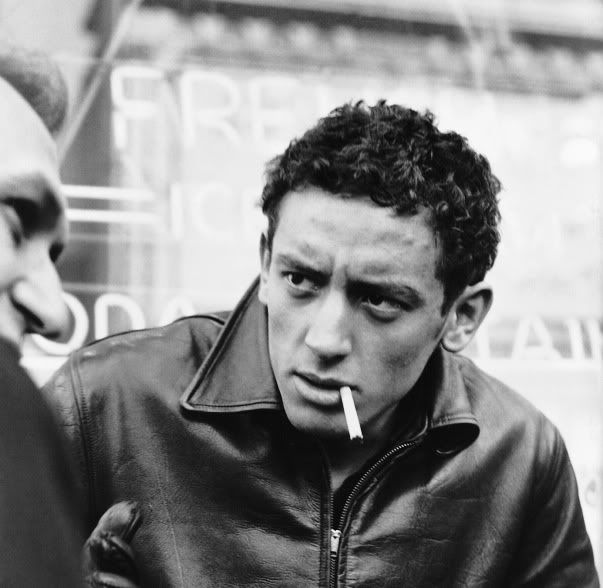
Shadows (1959), Cassavetes' first picture is a wild, jazz-soaked glimpse into the the New York City beatnik scene, which was first shot in 1957 but remade after after the original received a poor response during its three midnight showings at the New York Paris theatre.

Featuring a cast of unknowns and a mixture of scripted and improvised dialogue, Cassavetes' Shadows is a crude and disjointed affair, but as an example of early Guerilla filmmaking it is interesting in a historical context and there are certainly a number of great scenes. This is especially true of the opening credits party, featuring the confrontation between Tony (Anthony Ray) and Hugh (Hugh Herd) after Tony discovers his girlfriend Leila (Leila Goldoni) is of black origin (interracial relationships were still very much taboo during the period). The characters live in a cool bubble, everyone is beautiful and the only thing on their mind is love and good times but prejudice and disillusionment seeps in and sours their party drinks.

Structurally, Shadows is undeniably all over the place, perhaps more of a result of the shooting taking place over three years rather than Cassavetes experimenting with structure. The quality of performance also swings from being solid and believable to downright poor but again, they must have struggled to maintain interest and character continuity due to the lengthy shoot.

Like much of Cassavetes' work, Shadows is an acquired taste. However, if you're an arthouse regular or a young filmmaker then you may well will find plenty here to admire and inspire.

Wednesday, 30 May 2012

Review: Avengers Assemble


Critics the world over will be scratching their heads and shaking nervously as they ponder their write-up of Marvel's Avengers Assemble (2012) (previously titled The Avengers). Following an average set of trailers and a suspiciously low-key viral marketing campaign, only chronic liars and eternal optimists will claim they saw this coming. Not only is Avengers Assemble the best comic book adaptation to date, but also arguably one of the greatest action adventure blockbusters in cinema history, up there with the likes of Star Wars (1977), Raiders of the Lost Ark (1981) and Ghostbusters (1984).

High praise indeed, but in one fell swoop director Joss Whedon has not only reinvigorated the Marvel comic movie franchise, but also thrown down the gauntlet at Christopher Nolan's feet. The unstoppable juggernaut that is Nolan's The Dark Knight Rises (2012) might be destined for greatness, but it will have to be truly exceptional to better this take on the Earth's Mightiest Heroes.

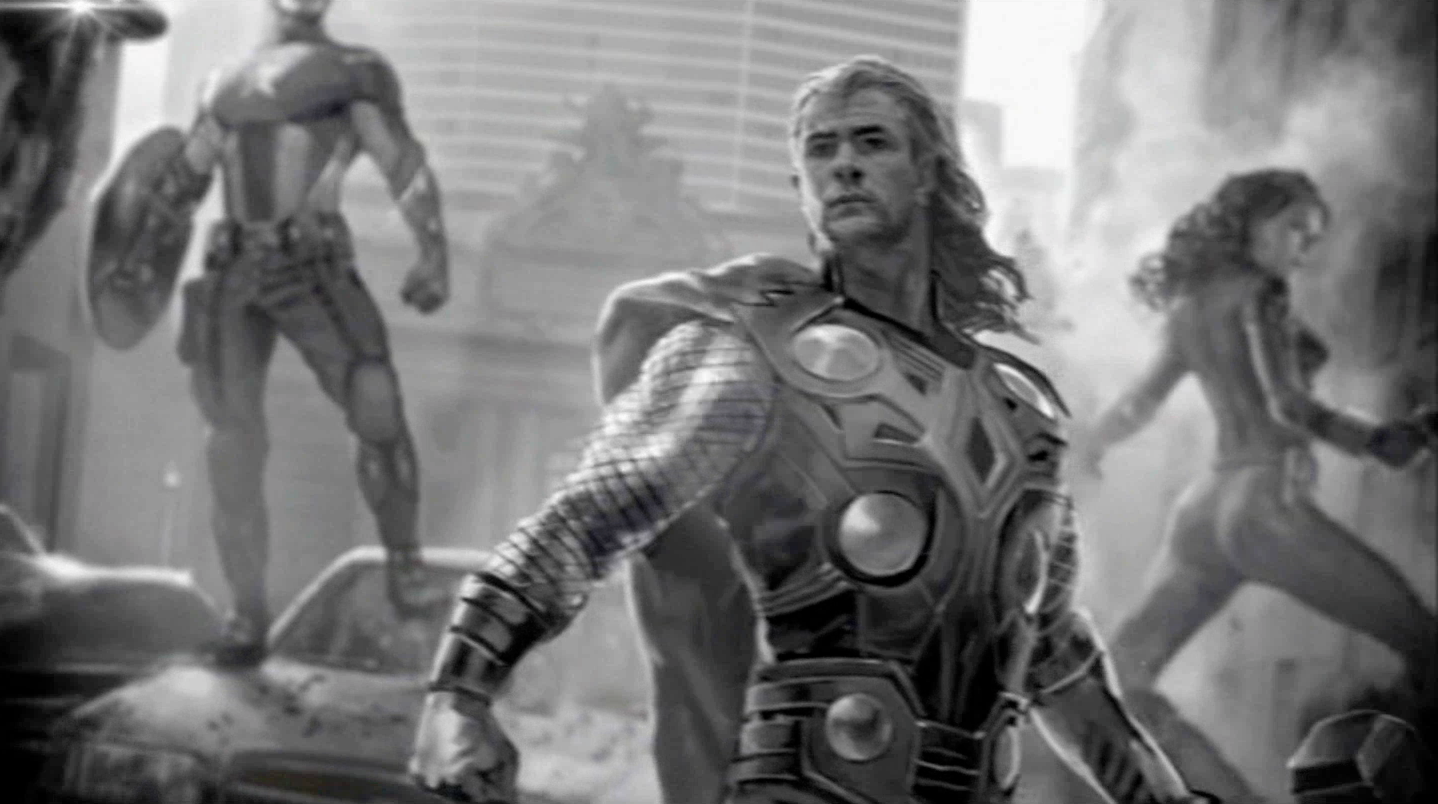
The balancing act Whedon has pulled off is nothing short of awe-inspiring. As both screenwriter and director, he has brought together a bunch of iconic characters and created a film in which they shine not only as individuals, but also dazzle as part of the Avengers team. Fears that this would be the Iron Man show are quickly diminished. Robert Downey Jr.'s effortlessly charismatic Tony Stark is at the centre of the action, but as any avid reader of the comics will tell you, Iron Man and Captain America are the team's prominent characters and their turbulent relationship is at the heart of most of the film's best moments.

Some critics will say Chris Evans' that Captain America is over-shadowed by Downey Jr.'s Iron Man, but they would be missing the point. Iron Man is the wise-cracking millionaire playboy and Cap is the steady-boy scout soldier, with Evans underplaying the role perfectly despite his ridiculous costume. All the heroes are great with perhaps the exception of Samuel L Jackson's Nick Fury, but it's more a case of Jackson doing a good job with a fairly weak character. Chris Hemsworth's Thor, Jeremy Renner's Hawkeye and Scarlett Johansson's Black Widow all get some fabulous scenes and Tom Hiddleston is suitably impish and evil as main antagonist Loki, yet it's Mark Ruffalo's Hulk/Bruce Banner that really steals the show. The Eric Bana/Edward Norton angry, mindless versions of the jolly green giant pale in comparison - finally we have a Hulk we can all get behind.

Whedon's masterful Avengers Assemble deserves an essay, and no short review could ever do it justice, but if you're in the market for one of the most wondrous and entertaining cinematic experience you could ever hope to have, book your tickets, buy your popcorn and prepare to be amazed.

Review: The Bad and the Beautiful


Rarely seen but frequently referenced in film studies lecture rooms, Vincente Minnelli's The Bad and the Beautiful (1952) is a twisted tale of the rise and fall of Kirk Douglas' ruthless Hollywood producer Jonathan Shields and one of the greatest 'movies about movies' to ever come out of Hollywood.

Wrongly regarded as a damning indictment of the studio system, which was shaking and on the verge of collapse when the film was originally released, Minnelli shows as much admiration for the manipulative Shields' bloody single-mindedness as he does condemnation for his cruelty. In fact, at times the director's affection for this lead character is a little too strong and the lying, deceptive Shields' actions are condoned as being a necessary evil in a dog eat dog business.

Perhaps Minnelli had a point, and in the hands of a lesser actor Shields would be a cardboard cut-out monster the audience would have difficulty empathising with. Fortunately, the passion and charm of Kirk Douglas gives Shields the extra dimension he requires as we are seduced into rooting for the Machiavellian son-of-a-bitch.

The rest of The Bad and the Beautiful's players are all on top form with Lana Turner, famed for her looks rather than her acting ability, giving a career best performance as the used and abused starlet Georgia Lorrison.

The picture is beautifully composed by the talented Minnelli, who must have been brimming with confidence after the Oscar success of An American in Paris (1951). His name is rarely featured in lists of great directors but the man was a true visual artist and the majority of his work is of the highest quality.

The Bad and Beautiful may not be quite the savage castigation of the studio system it is reputed to be (for the real dirt you'd be better off purchasing a copy of Robert Altman's 1992 film The Player), yet Minnelli's love/hate letter to Hollywood is still essential viewing for any seasoned film buff.