Showing posts with label Film. Show all posts

Monday, 22 October 2012

Uncut Review: Cockneys Vs Zombies


If you're a fan of amusing decapitations and buckets of guts then Matthias Hoene's cheap and cheerful Cockneys Vs Zombies (2012) will provide you with around about the same amount of entertainment as a decent game of monopoly. On the other hand, if the mere mention of a Zombie film induces you to vomit in disgust and that far too many film-makers seem rabidly intent on flogging a dead corpse rather than producing something original - you'd better shuffle those “Chance” cards and think about putting a hotel on Mayfair.

London-centric film seems to be all the rage these day's and the likes of Tower Block (2012) and Wild Bill (2011) have all received plenty of press, but the great British tradition of over-hyping home grown products has not led to an increase in box office receipts. Attack the Block (2012) for example, which was given excessive amounts of airtime and column inches bombed at the box office and although Cockneys Vs Zombies will undoubtedly find an audience on DVD, it went down like a lead balloon at the cinema.

The film has it's moments, and Hoene provides us with plenty of gruesomely inventive ways of disposing with the undead. Fans of Family Guy will find mirth in the flash comic asides and the attempt at social commentary with regard to the gentrification of the East End due to the Olympics is noble enough.

Unfortunately the negatives do outweigh the positives. Sure, seeing a Zombie being stabbed in the face with a lamp by Honor Blackman is amusing, but the carnage becomes tedious pretty quickly - and a scene involving the now obligatory zombie baby is distasteful rather than funny. It's just all a bit average, and despite the odd the spark of originality, you feel like you've seen it all before and seen it done better.

You get the impression that Cockneys Vs Zombies and Attack the Block were given the green light because the big wigs are looking for the next Shaun of The Dead (2004) and you can understand their reasoning. “Shaun…” was a low budget horror comedy that made millions and received plenty of critical acclaim, but it's wrong to regard it as the film all other British films should aspire to. Our film industry is capable of better, and there are plenty of talented writers and directors out there who have something original to offer. Who knows, maybe their movie will buck the trend and make some damn money for a change.


You can find the edited version at www.cine-vue.com

Sunday, 1 July 2012

Review: Rock of Ages


Based on the hit stage show of the same name, Rock of Ages (2012) is a blast from the past in the best sense of the word. After the wholesome plastic pop of the High School Musical franchise and repetitive tedium of TV's Glee, Hairspray (2007) director Adam Shankman's trip back to the days of sweaty bars, hard liquor and overt sexuality is the amphetamine injection the tired musical genre has been crying out for.

After leaving her backwater home town, aspiring singer Sherrie Christian (Julianne Hough) travels to Hollywood with dreams of becoming a star. After being robbed on arrival, she is befriended by handsome bartender Drew Boley (Diego Bonta), who gets her a job at the Bourbon Room owned by grizzled rock promoter Dennis Dupree (Alec Baldwin). Drew and Sherrie inevitably get the hots for each other and the main thread of the film is based around their relationship, but it's the sideshows that provide the real sparkle. Uptight Mayoress Patricia Whitmore (Catherine Zeta-Jones) campaigns to shut down the Bourbon Room due to its corrupting influence on the community, whilst strung-out rock star Stacee Jaxx (Tom Cruise) is struggling to maintain a grip on reality after years of rock and roll excess.

Rock of Ages' plot is evidently pretty thin and you're never in doubt that love will conqueror all, but the film's adult themes, diluted as they are compared to the stage production, are wonderfully refreshing and reminiscent of the likes of Grease (1977) and Dirty Dancing (1987). It's always the soundtrack that makes a good musical however, and the 1980s (and some early 90s) classic rock numbers are well chosen and in the most part, very well performed. In a recent screening, it's rumoured that an audience of sour-faced film critics were seen head-banging and whooping with joy - as good a sign as any that Shankman has put on a good show.

As for the talent, Bonta might be a bit drippy for some tastes but both him and Hough are perfectly acceptable as the lead lovers. The rest of the cast are all on form, but there are undeniably two stand-out performance. Zeta-Jones is brilliant as the maniacal puritan with a seedy past, whilst Cruise's Jaxx is undoubtedly the highlight of the piece. Cruise plays the role to perfection, exuding a dangerous masculinity that may well confuse those out there who had him pegged as a sexless 'pretty boy'.

There are a few negatives. Shankman's rock opera is maybe 10-15 minutes too long and Mary J. Blige's underwritten strip club owner is shoe-horned into the action for speculative reasons. Despite such small niggles,Rock of Ages is about as much fun as you can have in a multiplex cinema with your pants on. Word of mouth alone should guarantee it becomes one of the surprise hits of the summer, weather permitting.

Thursday, 31 May 2012

Review: Clone


The Oedipus complex has long fascinated and inspired artists and Hungarian writer/director Benedek Fliegauf is the latest filmmaker to tackle the subject in his first English language picture Clone (Womb, 2010). French actress Eva Green plays Rebecca, a young woman who returns home from Japan to rekindle a relationship with her childhood sweetheart Tommy (Doctor Who's Matt Smith). However, after only a few days together, Tommy is killed in a traffic accident as he and Rebecca are on the way to a political rally.

Traumatised by the incident and stricken with grief, Rebecca makes the rash decision to clone Tommy in order to bring him back to life - the twist being that in order to do so she must offer to be impregnated with Tommy's clone's embryo and eventually give birth to him. It's a bizarre plot, and many viewers may well have difficultly investing themselves in such a far-fetched concept, but with enough skill a good director can sell you even the most preposterous of premises. Whilst Fliegauf is certainly stylistically astute and his camera work and taste in locations is of the highest quality, his script doesn't quite match his technical prowess.

It's difficult to put you finger on exactly why Clone doesn't quite work. Yes, things move at a snail like pace and 1 hour 47 minutes of uneventful bleakness is not popcorn munching material, but in comparison to some arthouse exponents of slow cinema, this is a high octane rollercoaster ride.

Some critics have questioned Rebecca's motivation for wanting to give birth to her dead boyfriend's clone (when it's spelt out like that it's difficult not to chuckle). Yet, although it seems like an absurd thing to do, it's worth remembering that she did see her long lost love's body splattered all over the road. This is not a woman of sound mind, and although Fliegauf hints at this, his biggest flaw is his subtlety. As for Green, the camera clearly adores her and this is a timely reminder that she is a talent who's best days are ahead of her. Smith also does a fine job, but it has to be said that the spectre of Doctor Who looms large in certain scenes.

Overall, Clone is an interesting and thoroughly well-made high concept sci-fi. Whilst there have been cries from some quarters condemning it for it's incest references, these are tastefully-handled and pale in comparison to the likes of Ma Mère (2004) and Savage Grace (2007).

Review: How I spent my Summer Vacation


Few films released in UK cinemas this year have carried as much baggage as Mel Gibson's latest outing How I Spent My Summer Vacation (Get the Gringo, 2012), directed by Adrian Grunberg. The recent release of a tape containing an irate Gibson screaming obscenities at Basic Instinct (1992) scriptwriter Joe Eszterhas was the latest example of the US-born actor's appetite for self-destruction, with many commentators quick to claim that he'd finally banged the final nail in his film career coffin.

Your own personal opinion of Gibson may well effect your decision to go and see his latest movie, and its unlikely that any amount of positive praise will make a blind bit of difference. On the other hand, if you prefer to separate a man from his art then How I Spent My Summer Vacation is well worth the ticket price for those looking for efficient entertainment.

Gibson plays 'Driver', an anonymous American bank robber who is thrown into a Mexican jail after crashing through the border with a few million dollars in stolen cash. El Puebilto, based on a real life prison, is a walled town were inmates live with family members and gangsters run the show. Inside, big boss Javi (Daniel Gimenez Cacho) has both a rare blood type and a dodgy liver, with the only suitable donor a chain-smoking 10-year-old urchin (Kevin Hernandez) who resides in El Pueblito with his gutsy mother (Dolores Heredia) - which is where Driver steps in as the boy's unlikely protector.

Admittedly the organ donor plot device is entirely ridiculous and only truly there to provide a reason why Javi can't kill the kid from the off, the script, written by Gibson and first-time director Grunberg, suspends disbelief just enough for How I Spent My Summer Vacation to work. The transplant saga actually plays second fiddle to Driver's escapades in the prison - in fact El Pueblito is arguably the star of the show, its seedy backstreets and market stalls beautifully constructed and skilfully shot. This might be Grunberg's first job at the helm, but it certainly won't be his last.

As for Gibson, he's an old pro at the action flick template and few can balance laughs and drama with such relative ease. His grizzled, fiendishly clever character tricks and shoots his way through a superb blend of both wit and charm, and it's good to see Gibson finally back in familiar territory, despite of his personal demons.

Against all of the odds, How I Spent My Summer Vacation vacation is arguably the best shoot-em-up of the year so far, and it would be a crying shame for this to be Gibson's swansong regardless of its quality. The man might have some serious issues, but there's clearly plenty of life in the old dog yet.

Review: War of the Arrows


Han-min Kim's historical epic War of the Arrows (2011) is the blood-spattered and thoroughly enjoyable tale of the Manchu invasion of Korea in the mid-17th century. Skilled archer and hunter Nam-yi (Hae-il Park) embarks on a one man guerilla war against the Qing Army who murdered his step-father and kidnapped his sister. Utilising his proficiency with the bow he stalks the soldiers through the countryside but the tables are turned when the Qing commander Jyu Shin-ta (Seung-yong Ryoo) decides to hunt Nam-Yi through the undergrowth.
Fans of Hero (2002) and House of Flying Daggers (2004) will be in familiar territory with War of the Arrows, which features beautiful choreography, breath-taking action and a suitably rousing score. Everything works together in harmony and the director's own inventive 'arrow cam' is one of the highlights of the show.

What does let Kim's historical epic down, however, is tits plot. The potential was clearly there to explore the real history behind the invasion and give the audience a little context, but the director seems more interested in action rather than storyline. This is fine, but more discerning viewers might start to drift after they've watched the 100th arrow flying through some poor soul's neck.

Much of the second half of the film involves Nam-Yi being chased through the foliage pursued by Qing soldiers, and those of you who caught Mel Gibson's Apocalypto (2006) might get a feeling of déjà vu. In fact some scenes are so similar you wonder if Han-min Kim should have given Gibson a writing credit.

Overall, War of the Arrows hits the target, but you are left with the impression the missiles have all been fired before. Still, it will make a welcome addition to fans of this brand of Asian cinema's collection.

Review: Four


When reviewing an independent British-made production, a tiny part of you feels obliged to be kind. After all it's important that everyone supports the UK film industry, especially in this current economic climate, and nobody wants a home grown flick to flop. Unfortunately, John Landridge's debut feature Four (2011) is so mundane it's difficult to highlight the positives in order to coax you into purchasing a copy.

Featuring only four characters (the clue's in the title) and set in a single location, a random warehouse in a random city the premise is interesting enough. A Husband (George Morris) hires a detective (Sean Pertwee) to kidnap his wives Lover (Craig Conway) and the opening scenes featuring an anonymous person tied to chair with a bag on his head as Sean Pertwee's character subjects them to a beating is the stuff of compelling suspense and demands your attention.

Unfortunately, things begin to slide pretty quickly when Pertwee references and parodies the Reservoir Dogs (1992) torture scene, and it's so sloppy and obvious you'll be tempted to book a taxi round to the screen writers house and take his Tarantino films away.

The main twist reveal is tedious and the plot gets more and more confusing but Four's biggest crime is how god damn boring it is. If you're going to set your film a single location with a limited cast then the star of the show has to be the dialogue but other than Pertwee, who manages to squeeze a bit of life out of the lines the rest of the cast are floundering. One particular ramble by Craig Conway is so awful it beggars belief it was included in the final cut and although none of the actors shine, the majority of the blame lies in the script which should be given to budding writers as an example of how a good idea can go bad.

Four is yet another example of a poor British film based on a poor British script. At a rumoured cost of £500,000 you have to question how wisely that money was spent.

Review: Shadows


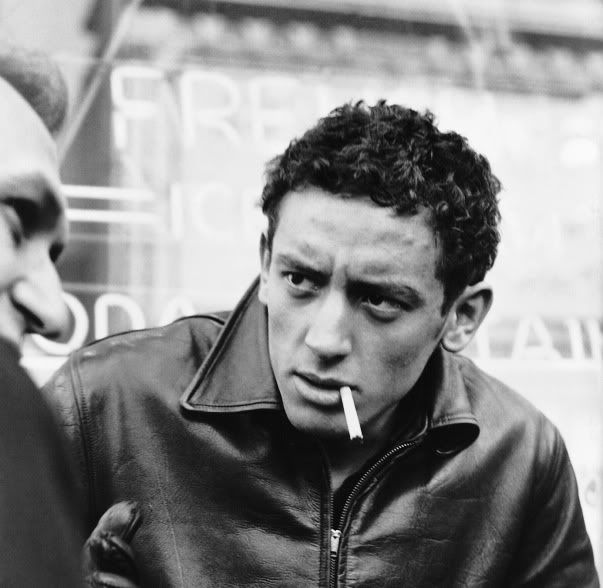
In the late 1950s, when the French New Wave pioneers were playing with narrative structure and dabbling in existentialism across the Atlantic, a young American director called John Cassavetes was busy conducting his own cinematic experiments and sowing the seeds of the American independent film movement. The work of Goddard, Truffaut and the rest of the Cahiers du Cinémacrew are embedded in the foundations of modern movie criticism, yet Cassavetes' raw output is rarely mentioned in film studies textbooks and lecture rooms.

Shadows (1959), Cassavetes' first picture is a wild, jazz-soaked glimpse into the the New York City beatnik scene, which was first shot in 1957 but remade after after the original received a poor response during its three midnight showings at the New York Paris theatre.

Featuring a cast of unknowns and a mixture of scripted and improvised dialogue, Cassavetes' Shadows is a crude and disjointed affair, but as an example of early Guerilla filmmaking it is interesting in a historical context and there are certainly a number of great scenes. This is especially true of the opening credits party, featuring the confrontation between Tony (Anthony Ray) and Hugh (Hugh Herd) after Tony discovers his girlfriend Leila (Leila Goldoni) is of black origin (interracial relationships were still very much taboo during the period). The characters live in a cool bubble, everyone is beautiful and the only thing on their mind is love and good times but prejudice and disillusionment seeps in and sours their party drinks.

Structurally, Shadows is undeniably all over the place, perhaps more of a result of the shooting taking place over three years rather than Cassavetes experimenting with structure. The quality of performance also swings from being solid and believable to downright poor but again, they must have struggled to maintain interest and character continuity due to the lengthy shoot.

Like much of Cassavetes' work, Shadows is an acquired taste. However, if you're an arthouse regular or a young filmmaker then you may well will find plenty here to admire and inspire.

Wednesday, 30 May 2012

Review: Avengers Assemble


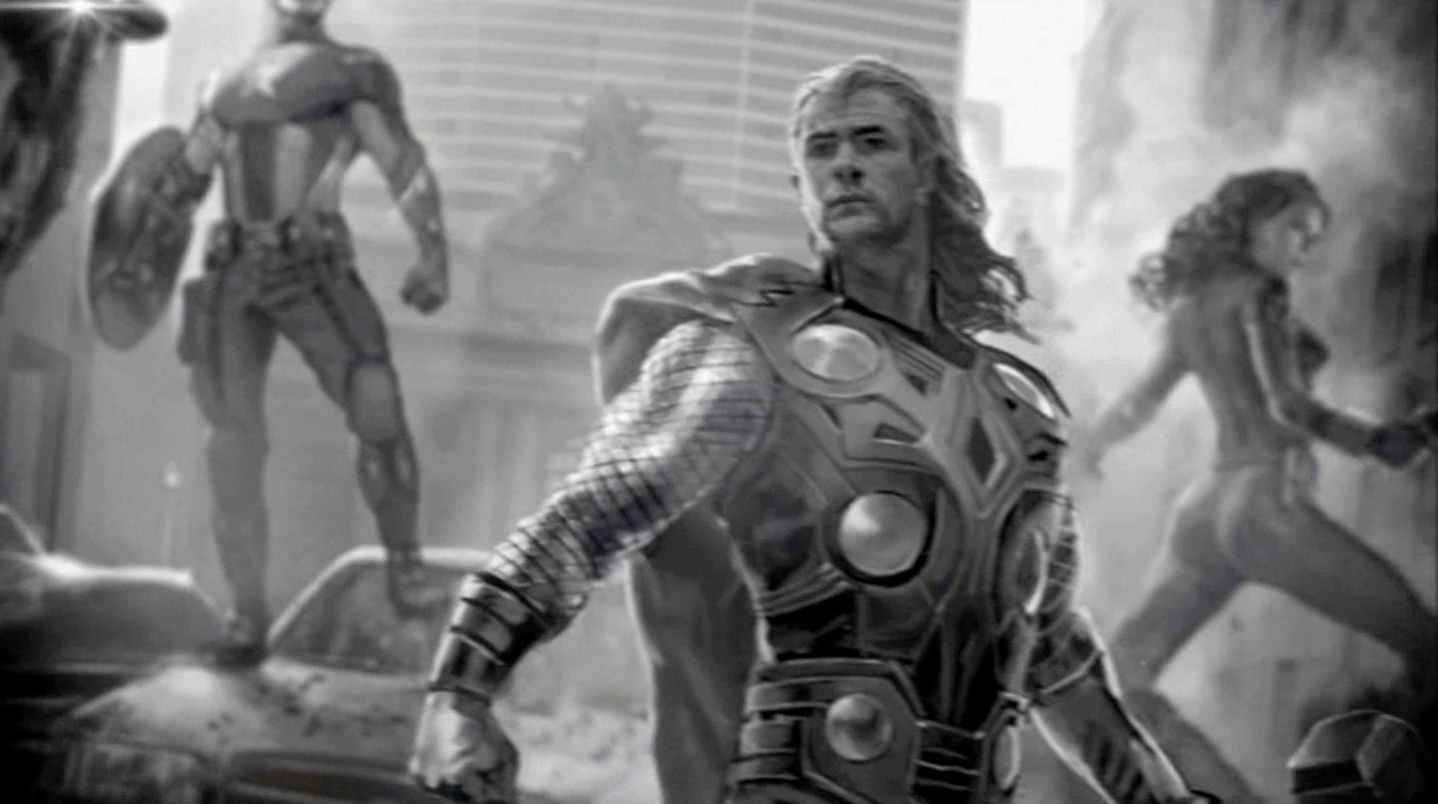
Critics the world over will be scratching their heads and shaking nervously as they ponder their write-up of Marvel's Avengers Assemble (2012) (previously titled The Avengers). Following an average set of trailers and a suspiciously low-key viral marketing campaign, only chronic liars and eternal optimists will claim they saw this coming. Not only is Avengers Assemble the best comic book adaptation to date, but also arguably one of the greatest action adventure blockbusters in cinema history, up there with the likes of Star Wars (1977), Raiders of the Lost Ark (1981) and Ghostbusters (1984).

High praise indeed, but in one fell swoop director Joss Whedon has not only reinvigorated the Marvel comic movie franchise, but also thrown down the gauntlet at Christopher Nolan's feet. The unstoppable juggernaut that is Nolan's The Dark Knight Rises (2012) might be destined for greatness, but it will have to be truly exceptional to better this take on the Earth's Mightiest Heroes.

The balancing act Whedon has pulled off is nothing short of awe-inspiring. As both screenwriter and director, he has brought together a bunch of iconic characters and created a film in which they shine not only as individuals, but also dazzle as part of the Avengers team. Fears that this would be the Iron Man show are quickly diminished. Robert Downey Jr.'s effortlessly charismatic Tony Stark is at the centre of the action, but as any avid reader of the comics will tell you, Iron Man and Captain America are the team's prominent characters and their turbulent relationship is at the heart of most of the film's best moments.

Some critics will say Chris Evans' that Captain America is over-shadowed by Downey Jr.'s Iron Man, but they would be missing the point. Iron Man is the wise-cracking millionaire playboy and Cap is the steady-boy scout soldier, with Evans underplaying the role perfectly despite his ridiculous costume. All the heroes are great with perhaps the exception of Samuel L Jackson's Nick Fury, but it's more a case of Jackson doing a good job with a fairly weak character. Chris Hemsworth's Thor, Jeremy Renner's Hawkeye and Scarlett Johansson's Black Widow all get some fabulous scenes and Tom Hiddleston is suitably impish and evil as main antagonist Loki, yet it's Mark Ruffalo's Hulk/Bruce Banner that really steals the show. The Eric Bana/Edward Norton angry, mindless versions of the jolly green giant pale in comparison - finally we have a Hulk we can all get behind.

Whedon's masterful Avengers Assemble deserves an essay, and no short review could ever do it justice, but if you're in the market for one of the most wondrous and entertaining cinematic experience you could ever hope to have, book your tickets, buy your popcorn and prepare to be amazed.

Review: The Bad and the Beautiful


Rarely seen but frequently referenced in film studies lecture rooms, Vincente Minnelli's The Bad and the Beautiful (1952) is a twisted tale of the rise and fall of Kirk Douglas' ruthless Hollywood producer Jonathan Shields and one of the greatest 'movies about movies' to ever come out of Hollywood.

Wrongly regarded as a damning indictment of the studio system, which was shaking and on the verge of collapse when the film was originally released, Minnelli shows as much admiration for the manipulative Shields' bloody single-mindedness as he does condemnation for his cruelty. In fact, at times the director's affection for this lead character is a little too strong and the lying, deceptive Shields' actions are condoned as being a necessary evil in a dog eat dog business.

Perhaps Minnelli had a point, and in the hands of a lesser actor Shields would be a cardboard cut-out monster the audience would have difficulty empathising with. Fortunately, the passion and charm of Kirk Douglas gives Shields the extra dimension he requires as we are seduced into rooting for the Machiavellian son-of-a-bitch.

The rest of The Bad and the Beautiful's players are all on top form with Lana Turner, famed for her looks rather than her acting ability, giving a career best performance as the used and abused starlet Georgia Lorrison.

The picture is beautifully composed by the talented Minnelli, who must have been brimming with confidence after the Oscar success of An American in Paris (1951). His name is rarely featured in lists of great directors but the man was a true visual artist and the majority of his work is of the highest quality.

The Bad and Beautiful may not be quite the savage castigation of the studio system it is reputed to be (for the real dirt you'd be better off purchasing a copy of Robert Altman's 1992 film The Player), yet Minnelli's love/hate letter to Hollywood is still essential viewing for any seasoned film buff.

Preview: Ghostbusters 3


After years of rumours, rewrites and false dawns, CineVue can finally reveal that the cameras will roll on the long-awaited Ghostbusters 3 in September of this year, with a Christmas 2013 release date a real possibility. Speaking earlier this week during a secretive interview at a top London hotel, writer/producer Dan Aykroyd explained, "We're very excited. It's been over twenty years since we wrapped on Ghostbusters 2 and ever since I've received thousands of letters and e-mails begging us to continue the story. It's been a long hard road to get here, but finally I can say,Ghostbusters 3 is go."

Firstly, we asked Aykroyd if Bill Murray had at last agreed to return as the wise-cracking Peter Venkman, and also if the stories of him tearing up the script had any foundation. "Look" said a somewhat agitated Aykroyd, "Everyone wanted Bill to return and yes, he did have issues with some of our original ideas, but we ironed out the creases and he's now fully on board with the project and eager to slip the old Proton Pack on again".

Eager to gather as much information as possible during our hastily arranged meeting, we asked Aykroyd if he could give us any information regarding characters and plot, and were duly astonished by his response. "I'll be returning as Ray Stanz, but unfortunately Harold Ramis and Ernie Hudson will be unable to return so we had no choice but to recast. The part of Egon Spengler will now be played by Johnny Depp and Robert Downey Jnr. will play the Winston Zeddemore role".

Aykroyd continued: "Johnny was an obvious choice for Egon, but it wasn't until we saw Tropic Thunder that we realised Robert would be the perfect Winston". Aykroyd was at first reluctant to reveal the story, but after some gentle persuasion we did get one final revelation out of the 59-year-old Canadian: "I wasn't going to say anything, but here goes: It's going to be a musical." Of course, we were stunned by the concept, but Aykroyd wasn't finished. "It was Bill's idea. He said he wanted to make a musical addition to the Ghostbusters franchise, so we added some show tunes. We struck upon the idea of taking songs from old musicals and adapting them, so we have 'I'm Gonna Wash that Slime Right outta my Hair', 'You'll Never Bust Alone', 'Hopelessly Devoted to Ectoplasm' and my personal favourite ' Luck be a Marshmallow Man Tonight'.

With that final reveal laid on the table, our time with Aykroyd was unfortunately up, leaving us dazzled, delighted and drunk on expectation. Fans may well initially turn their nose up at the musical direction, but with old guard Aykroyd and Murray, we have very high expectations.

Ghostbusters 3: The Musical is due to be released in UK cinemas in late 2013.

Review: Wrath of the Titans


Louis Leterrier's Clash of the Titans (2010) was a bloated, passionless picture let down by a poor 3D retro-fit, uninspired direction and ridiculous dialogue. Innocent audiences stumbled into cinemas believing they were about to experience a sweeping mythological epic, but after the credits rolled hordes of them hit the forums to forewarn others and express their disappointment. Yet somehow Clash made nearly $500 million at the box office - hence a hastily cobbled-together sequel in the form of Wrath of the Titans (2012).

This time around, Battle Los Angles (2011) director Jonathan Liebesman takes the helm, and although he lacks pedigree, it's obvious from the first battle sequence that Wrath is a marked improvement on its predecessor. The much-lauded special effects still don't quite astound, only the coldest of souls will be able to deflect Lieberman's adrenaline-tipped arrows as we weave from monstrous battle to battle.

Liebesman's sequel is fast, furious throughout, and with a run-time of 99 minutes you won't get a chance to pause for thought - which probably for the best when you consider Wrath's numerous, near-terminal flaws. Let's ignore the tacked-on-3D which is as pointless as always, and in no way enhances the experience, and instead concentrate on the script. It doesn't fill your heart with hope when you know that the two of the four credited writers of the screenplay were responsible for the dismal Green Lantern (2011) and Red Riding Hood (2011), yet Greg Berlanti and David Johnson have managed to descend even deeper into dialogue hell.

Nobody within the big-name cast is on form here. Sam Worthington (Perseus) might have the acting range of a chair leg, but even old pros like Liam Neeson (Zeus) and Ralph Fiennes (Hades) struggle with their clunky lines. Rosamund Pike's Andromeda is great to look at but surplus to requirements, and only Bill Nighy's bizarre turn as former God Hephaestus stands out from the crowd.
Still, for all it's many faults Wrath of the Titans is an enjoyable ride, and no matter how many critics tear it to pieces the kids, teenagers and blockbuster-guzzlers are going to be purchasing tickets in their droves. This is not high art - and who in the right mind would it expect it to be - so better to turn your brain off at the door, chew on some popcorn and let the sweet waves of blissful ignorance wash over you.

Review: Black Block


G8 Summits have become synonymous with political protest, civil unrest and running battles between activists and police. The 2001 Genoa summit was a particularly dramatic affair, involving around 200,000 protesters and an army of officers whose violent handling of the situation led to a number of individuals being charged. The most heinous example of police brutality - the unprovoked attack on the Diaz school which involved police storming the building as activists slept and subjecting them to savage beatings - is the subject of Carlo Augusto Bachschmidt debut feature Black Block (2011).

Bachschmidt interviews several activists who were at the Diaz school and each of them recounts their own version of events. Obviously they have all been affected by the experience and although their injuries have long since healed the mental scars remain.

Although little footage of the raid exists the snippets of video footage, photographs and eye witness testimonies paint a vivid picture and no matter what your politics are it's clear that something very wrong happened that night and the Italian government attempts to exonerate the police is yet another example of how corruption during the tenure of Silvio Berlusconi was epidemic.

Anyone looking to criticise Black Block might suggest the argument is very much one sided and perhaps an interview with an official or a police officer would have provided the balance that some will require. It's not the most beautifully constructed documentary but it succeeds in it's aim to shed light on an incident that received little media coverage and has long faded from memory.

Whilst films such as this are usually only sought out by left leaning liberals they deserve a wider audience and remind us that cinema can educate as well as entertain. You might not agree with the activists or care about there cause but their courage and determination to fight the good fight despite what they suffered at the hands of the state should inspire you and at the very least, earn your respect.

Review: The Help


Destined to be broadcast on Sunday afternoons from now until the end of days, Oscar-nomineeThe Help (2011) is a sweet, involving and exceptionally well-acted civil rights yarn that is, thankfully, more interested in entertaining the audience rather than painting a gritty, realistic picture of the lives of African American maids in Jackson, Mississippi during the early 1960s.

Emma Stone plays Eugenia 'Skeeter' Phelan, a recent university graduate who returns home to her family's plantation with dreams of becoming a professional writer. Unmarried, liberal and socially conscience, Skeeter is a rare bird amongst the prissy white middle-class housewives who rely on their maids to clean their houses, prepare their meals and raise their children. Feeling a special affinity for these domestic aides, Skeeter decides to write a book, The Help, yet none of the them are willing to tell her their story due to fear of reprisals. Eventually, she manages to persuade one maid, Abileen Clark (Viola Davis) to be interviewed about her experiences.

Writer and director Tate Taylor should be commended on a job well done with The Help, only his second feature. Having grown up in Jackson (one of his childhood friends was the author Kathryn Stockett, who wrote the source novel of the same name), Taylor clearly draws from his own experiences and his fondness for the characters, even the snobbish harpy Hilly Holbrook (Bryce Dallas Howard), is obvious.

The Help is certainly not a complex film by any stretch of the imagination, and although themes of race, gender and class are all thrown into the pot, it all amounts to a very thin stew. This is Driving Miss Daisy (1989) territory rather than Mississippi Burning (1988) and perhaps Stockett and Taylor's affection for the town and it's people is the reason behind the rose-tinted spectacles.

Davis' role in the film was rewarded with a Best Actress Oscar nomination, yet though there is nothing wrong with her performance, calls of outrage from some quarters claiming that Davis deserved the nod over Meryl Streep are preposterous. In addition, Octavia Spencer's Best Supporting Actress Oscar could easily have gone to her co-star Jessica Chastain. Chastain's turn as Celia Foote is unarguably superb, whereas Spencer's Milly Jackson is solid but unremarkable - her ultimate 'gift' to Holbrook a crude and unnecessary plot device.

It's practically impossible to dislike Taylor's The Help due to the fact that it's so damn inoffensive. Though it may have been soured somewhat by Oscar-voting politics and award-baiting tokenism, for the majority of viewers The Help should be a couple of hours well-spent.

Review: The Greatest Movie Ever Sold


Best viewed on a brand new Sony Bravia HD TV, Morgan Spurlock's latest documentary The Greatest Movie Ever Sold (2011) is a noble, yet lightweight attempt to provide the audience with an insight into the murky world of advertising and product placement.

Since the introduction of the Internet and TV recording devices such as the exceptional Sky Digibox, there has been a steady decline in viewing figures for traditional television commercials which has led to advertisers placing more value on product placement and something called co-promotion.

Product placement has been around since the early days of Hollywood and basically it means that a brand will give you a bundle of cash if you feature their product in a flattering light. A filmmaker wouldn't have to abandon his principles as such just make sure that Gary Cooper was smoking a delicious Lucky Strike in a scene rather than a Chesterfield. Co-Promotion on the other hand is far more dastardly and involves brands having control over the way their product is portrayed and in some cases, control over the script and final edit.

Obviously this is a pretty controversial subject and worthy of investigation but Spurlock never digs deep enough and interviews with directors such as Peter Berg and Quentin Tarantino are brief and not particularly revealing. Most of the documentary run time is taken up by yawn inducing scenes of Spurlock sat around a table trying to coax a variety of chinless advertising executives into sponsoring his movie but there are some interesting moments. His trip to Sao Paulo which in 2007 passed a so called 'Clean City' law which banned all forms of outdoor advertising was an eye opener and perhaps he should have sought out a few more examples of brand defiance.

The problem with Spurlock is that his ideas are far better than his delivery and rather than being driven by outrage he is driven by curiosity and a desire to please and entertain. Sometimes this works and his directorial debut Super Size Me (2004) was both amusing and informative, but The Greatest Movie Ever Sold is low on laughs and low on insight and although his intentions are admirable. Spurlock has delivered the documentary equivalent of a cheap watch rather than a diamond Rolex.

Review: Rampart


Few actors have a résumé as diverse as Woody Harrelson's, and even less have managed to leave a long-running sitcom and avoid the perils of audience over-familiarity and typecasting. Since Cheers wrapped, Harrelson has worked with the likes of Oliver Stone, Terrence Malick, the Coen Brothers and Robert Altman, and his turn as a corrupt cop in Oren Moverman's Rampart (2011) is further proof that he is capable of creating troubled, complex characters.

David Brown (Harrelson) is somewhat of a hero to his fellow officers due to his tough no nonsense approach, and although his colleagues and superiors are fully aware that he bends the law to breaking point what they don’t know is the full extent of his abuses of power. Brown shakes down pharmacists for Viagra pills, commits armed robberies and kills anyone that might have something on him.

He's a bad cop in a violent city and whilst Brown echoes Harvey Keitel's nameless gumshoe in the original Bad Lieutenant (1992) he has more in common with Denzel Washington's Alonzo Harris inTraining Day (2001). Both Harris and Brown are corrupt but charming souls who struggle with the guilt and immorality that has turned them into monsters. They would like to get out but are in too deep and despite their efforts to hold back the tide, sooner or later it's bound to wash over them.

Rampart is Oren Moverman's follow-up to The Messenger (2009) which also featured a strong performance from Harrelson and the director has a good eye. His use of reflection, colour and close-up is cool rather than flashy but unfortunately the script, which he also wrote doesn't quite pack the punch that it should. It's all a little too cold and inevitable and although the likes of Sigourney Weaver and Robin Wright do fine their characters are under developed as the constant focus on Brown leaves little room for anyone else to breath.

Moverman's Rampart is a fine film with a towering leading performance from Harrelson, great cast and solid direction, but may perhaps be too low-key to linger long in the memory.

Review: Ghost Rider: Spirit of Vengeance


As ham acting goes, Ghost Rider: Spirit of Vengeance (2011) is a big fat hog roast with a side order of crackling. Nicolas Cage returns as Johnny Blaze/Ghost Rider, cranking up his patented nervous ticks and wide maniacal eyes to 11, but we've seen it to many times and he is now officially tap dancing on the edge of self parody. You can also usually count on Ciarán Hinds to deliver the goods, but his Prince of Darkness is a gurning middle-aged man rather than a fearsome supernatural force.

If this was a parallel universe, Johnny Whitworth as antagonist Carrigan/Blackout would have picked up the Devil's slack and provided The Rider with a worthy adversary, but unfortunately in this universe, Whitworth is incapable of squeezing out a single drop of menace - but to be fair, his character is underdeveloped and severely lacking in screentime. The only saving grace on the acting front is Idris Elba's Moreau, a drunken French holy man who possesses superhuman powers. Who he is and how he acquired these powers is never explained, but Elba's charisma carries him through.

The dynamic directing duo of Mark Neveldine and Brian Taylor manage a couple of nice set pieces, but they have editing issues and the stunts and special effects are low on spectacle - although it has to be said that The Ghost Rider himself looks excellent and is a vast improvement on the first film.

Yet despite a mountain of flaws, Ghost Rider: Spirit of Vengeance is just about entertaining in a 'so bad it's good' kind of way. You may find yourself infinitely more forgiving of its lack of quality if you pretend it's simply a low budget Troma flick rather than a multi-million dollar studio picture.

In a year of massive comic book movies such Christopher Nolan's The Dark Knight Rises, Joss Whedon's The Avengers and Marc Webb's The Amazing Spider-Man, Ghost Rider: Spirit of Vengeance will be quickly forgotten, but if you're in the mood for 90 minutes of mindless nonsense - Cage is your man.

Review: To Kill a Mockingbird


Casting a critical eye over sacred films based on sacred texts is a pretty thankless task, especially when the story happens to be Harper Lee's lauded and beloved To Kill a Mockingbird (1962). Recently restored and re-released on Blu-Ray to celebrate its 50th Anniversary, old believers can enjoy a return to trip to Maycomb to visit Scout, Jem and Atticus - whilst potential converts will either drink the Koolade or question its divinity.

The biggest problem with the film is that it has been imitated and robbed blind by so many coming of age tales and courtroom drama's over the years and whilst Robert Mulligan's direction and Elmer Bernstein's score remain strong the power of the narrative has waned . Back in 1962 when the fight for Civil Rights was on the rise its understandable why the story struck a chord with teenagers in particular due to it's simplistic handling of a complex issue. Looking at it through the eyes of an adult the withered arm defence is cheap and the whole Boo Radley affair under developed and unnecessary to the plot but fortunately the flaws are masked by some excellent performances and camera work.

Gregory Peck is perfectly cast as Atticus Finch. Slow, steady and dripping gravitas, he's almost in the background for the first half of the film allowing the children to take the spotlight but during the courtrooms scenes the man is immense. Some of it is in his delivery but it's his physical presence that makes him a man apart.

They don't make them like Peck anymore, and watching him dominating the screen makes you mourn the decline of his breed. Mary Badham and Phillip Alford as Scout and Jem also give two of the finest performances by child actors in cinema history. Badham in particular is the personification of Harper Lee's Scout and her nomination for best supporting actress was richly deserved.

As for Robert Mulligan's direction, the highlight are undoubtedly two close-ups during the courtroom scene, especially one on Tom Robinson which was not only the perfect choice of shot but also showcased Brock Peters talent. You rarely see a prolonged close-up of an actor these days and Mulligan reminds us just how effective it can be. To Kill a Mockingbird is by no means as irreproachable as our memories would lead us to believe but it's still a gripping yarn and well worth revisiting.

Review: Bombay Beach


Scooping the award for Best International Documentary at last year's Tribeca Film Festival,Bombay Beach (2011) is the kind of refreshing, palate-cleansing experience a film aficionado needs to wash away the taste of greasy blockbusters and unctuous arthouse. Israeli director Alma Har'el's portrait of an impoverished community residing in a dilapidated settlement on the banks of the Salton Sea is a moving, amusing and often beautiful glimpse at a side of America we rarely get to see.

In the 1950s and 60s, the Salton Sea - a 385-square mile body of water on the edge of the desert - was a popular tourist destination and celebrity hang out. Now the stars and holidaymakers are long gone and all that remains are a few dying towns with waning populations and crumbling buildings. Bombay Beach itself looks post apocalyptic, and Har'el frequently casts her camera towards the shoals of dead fish on the shoreline, starved of oxygen due to the high saline content of the water. Nothing should be living here, let alone thriving, and yet as we are introduced to the resident misfits and dreamers it becomes clear that even in the harshest of environments love, humour and aspiration can bloom.

Har'el spent a year embedded in the community, but rather than attempting to overload Bombay Beach with all manner of misfits, she wisely chose to focus on three stories; the Parrishs are a lower-working class family frequently in trouble with social services due to their domestic hygiene issues and fondness for detonating weapons-grade explosives; wizened ladies man Dorran 'Red' Thompson scoots about the desert on his four-wheeler and spouts frontier philosophy and casual racism; finally, there's local football star Cee-Jay Thompson, who relocated to 'The Beach' from LA after his cousin was murdered, yet still dreams of playing in the NFL and hooking up with his best friend's sister.

Even if Har'el had desired to produce a straight-up documentary it would have been a worthy exercise, but instead of letting nature take its course she chose to choreograph some scenes. This has compelled some critics to question the veracity of her film, but it's these dance sequences which move to the music of Bob Dylan, Beirut and Zac Condon that lift Bombay Beach up from the average documentary doldrums.

Those who pine for gritty realism in their docs should look elsewhere, but if you're in the market for some soul-stirring surrealism then grab your bucket and spade - as for Har'el, she's definitely one to watch.

Review: Young Adult


Meryl Streep's uncanny performance as Margaret Thatcher in The Iron Lady (2011) is almost certainly going to secure the US star a third Oscar at this year's Academy Awards, but award-winner Charlize Theron will have every right to feel aggrieved after missing out on a Best Actress nod for her superb turn in Jason Reitman's latest film, Young Adult (2011).

If asked who they thought the five best Hollywood actresses working today were, few people polled would realistically mention Theron. The Dior perfume ads and odd turkey - such as the godforsakenAeon Flux (2005) - have seemingly distracted us from realising that the South African-born actress is an outstanding talent. If, by the time Young Adult's credits roll, you don't think that Theron is the best thing since tinned custard then you're either sick, in heavy denial or you've choked to death on your overpriced popcorn.

Her role as serial killer Aileen Wuornos in Patty Jenkins' Monster (2003) earned Theron a Best Actress statue and her turn as the sociopathic Mavis Gary in Reitman's latest is arguably cut from the same cloth. Her Aileen was pure, poor white trash. The long years of sexual and substance abuse had left her bedraggled, bloated and psychically unappealing. Mavis is at the opposite end of the social spectrum; a well-off and well-educated ghost writer of a series of young adult novels who has gone to rack and ruin due to depression and a drink problem. Mavis can hide that she is damaged goods with a bag full of make-up and a hair extension, but on the inside, she is every bit as disturbed and monstrous as Aileen.

At least that's one interpretation of the film's protagonist. Another would be that Mavis is nothing more than a bored, spoilt brat who sets off on a quest to ensnare her ex-boyfriend Buddy Slade (Patrick Wilson) in order to shake off a bout of writer's block. Her day-to-day life is dull and uninspiring, so she creates a drama out of thin air and then feeds off the chaos. All that she wants is enough inspiration to finish her book and it doesn't matter to Mavis who she hurts or steps on in the process.

Young Adult is Reitman and screenwriter Diablo Cody's second outing as a creative team after the hit comedy drama Juno (2007), and they have certainly justified the hype delivering a pitch black comedy that holds up a mirror to the modern, single woman. The film will unsettle certain viewers as they are bound to see shades of their own life in Mavis' selfish and shallow existence where as others will be disappointed that the trailer gave the impression the film is a cross between Bad Teacher (2011) and Reitman's previous film Up in the Air (2009), when it's really more Fatal Attraction (1987) meets American Psycho (2000).

The man they still call Quentin Tarantino recently named Young Adult in his top films of 2011, and if that endorsement hasn't tempted you to part with your money, then trust us - Theron's 'Patrick Bateman in lipstick' is well worth the ticket price on its own.

Review: Moneyball


Baseball has always been a popular subject for Hollywood to tackle and the passion for the US national pastime usually equates to a multitude of bums on seats. During the 1980s there was a flood of big-hitting baseball films such as Field of Dreams (1989), Major League (1989) and John Sayles' superb dramatisation of the 1919 Chicago White Sox scandal, Eight Men Out (1988)(probably the most interesting and cerebral baseball film of the decade). Bennett Miller'sMoneyball (2011) has all the brains and insight into the game as Eight Men Out and much more besides.

Scripted by Steven Zaillian (The Girl with the Dragon Tattoo [2011]) and Aaron Sorkin (The Social Network [2010]),Moneyball is the tale of Billy Beane (Brad Pitt), a former baseball prodigy who never lived up to his potential and eventually became the general manager of struggling major league team the Oakland As.

Unable to compete with the financial resources of the likes of the New York Yankees, Beane - along with Yale Economics graduate Peter Brand (Jonah Hill) - decide to create a team based on player statistics rather than their perceived worth. Of course everyone in baseball is convinced Beane's idea won't work, especially Oakland's veteran team manger Art Howe (Philip Seymour Hoffman), who is unwilling to embrace Beane's method.

One of the problems with sports films is that unless you're a fan of the game in question, you're probably not aware of its history and much of the terminology will go over your head. Whilst some prior knowledge of baseball will enrich the experience of watchingMoneyball, most of the action takes place off-field and concentrates on Beanes struggle against an archaic system. There is plenty for people who don't know the difference between a fast ball and a curve ball fans to enjoy.

Pitt is perfectly cast as the laid back but passionate man with a plan. It's his most grown-up and assured performance to date and he carries the film like a seasoned pro. The supporting cast of Hill and Hoffman both deliver, but such is the gravitas of Pitt that the two are forced to play second fiddle whenever they share the screen with him.

All in all, Moneyball is a fine addition to the baseball film canon. It's not in any hurry to get anywhere and the climax doesn't quite satisfy, but there is enough snappy dialogue and rousing moments to keep you enthralled.